The island
Seventy-three beaches, and the ones worth the drive
Milos is a drowned volcano, which is why the rock keeps changing colour and why no two beaches on it look alike.
It is 151 square kilometres and takes forty minutes to cross. That is small enough to see properly in a week and large enough that people who stay three days see the wrong half of it.
We keep a written guide at reception, marked up by the six of us, and we will draw on a map for you. What follows is the short version.
Beaches
Three to start with
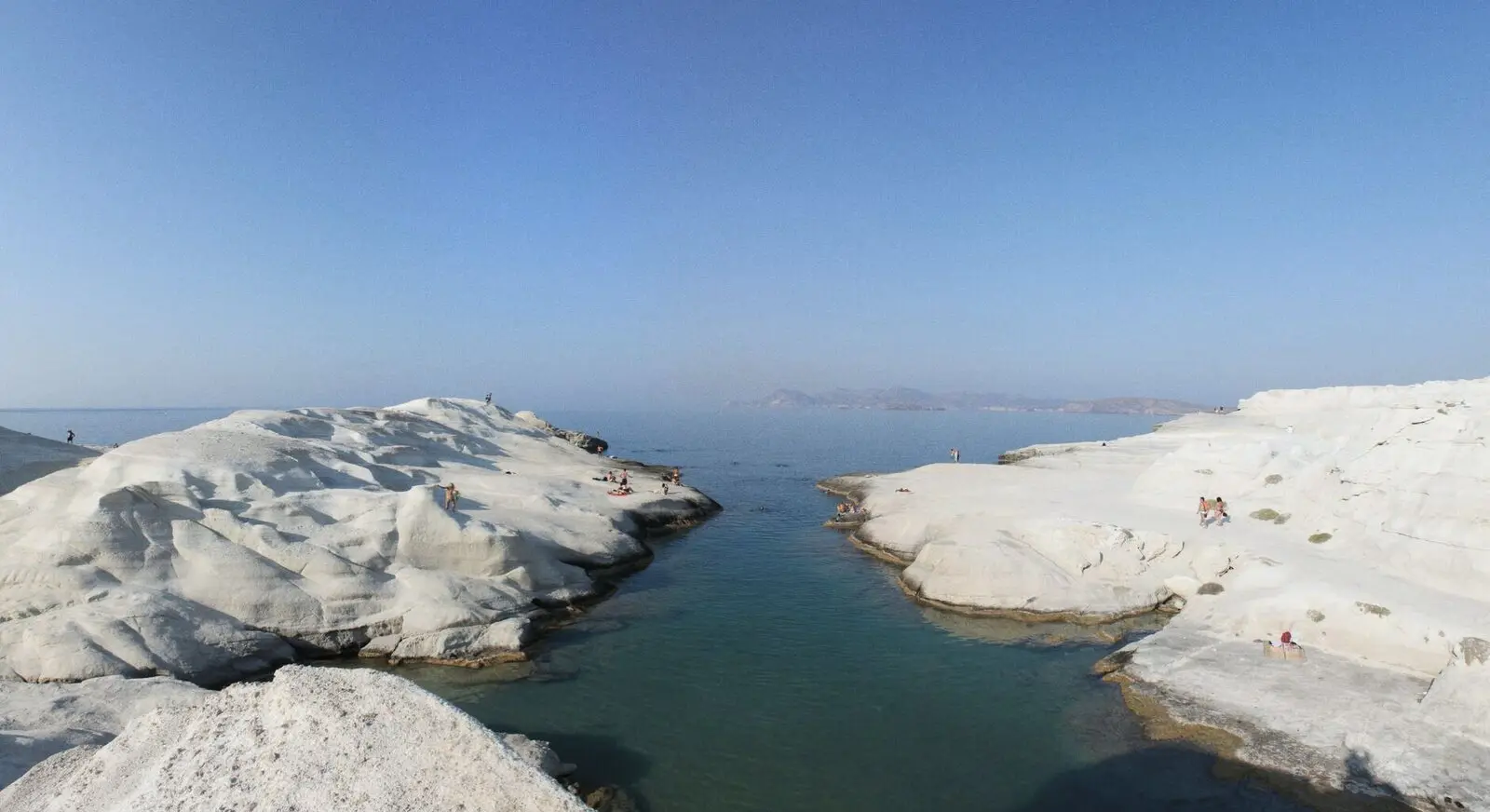
Sarakiniko
12 minutes, no shade, go at seven
White volcanic rock worn smooth, with a channel of water cut through it. It is on every postcard and it is still worth it, at seven in the morning, before the tour buses.
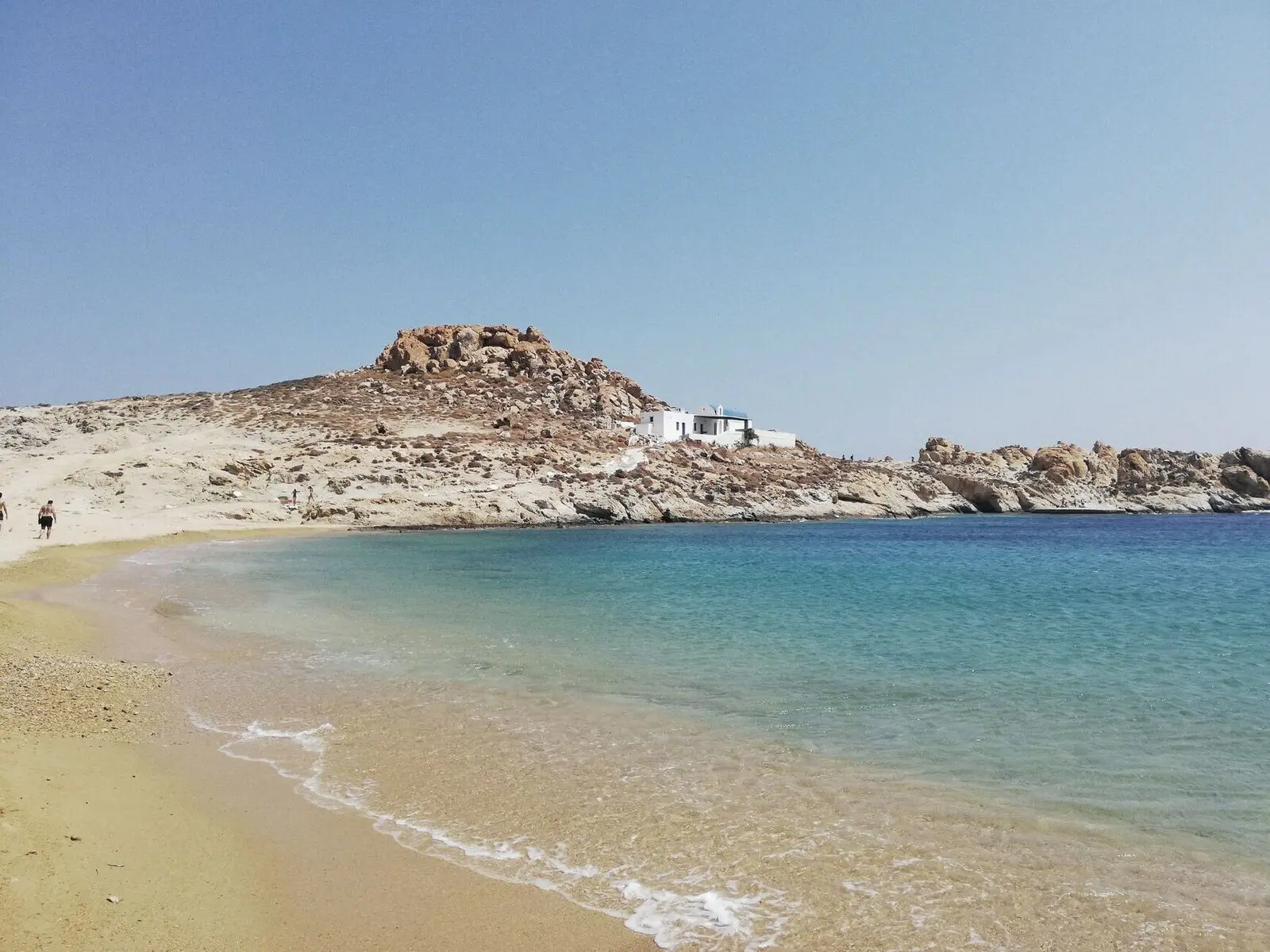
Firiplaka
28 minutes, wants a car, umbrellas
Long, pink-cliffed, on the south coast and out of the north wind. The one to drive to when the meltemi is blowing and everything here is choppy.
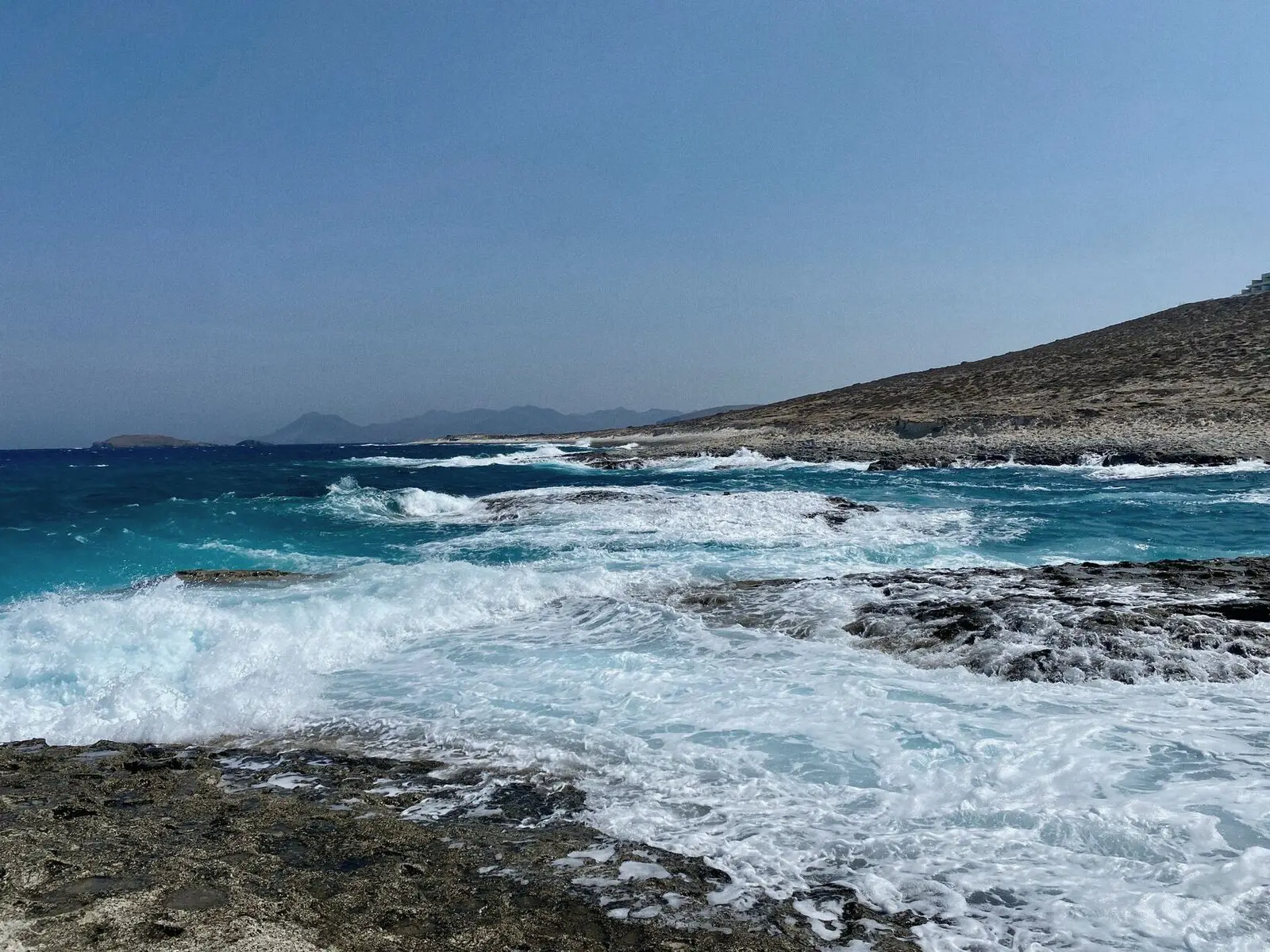
Tsigrado
30 minutes, a rope ladder, not for everyone
Reached down a crack in the rock by a rope and a wooden ladder. Small, perfect, and genuinely not suitable if you are unsure on your feet.
From our door
Everything on Milos is close. What takes the time is the last kilometre, which on four of the best beaches is unsurfaced.
Not a beach
Plaka at seven, Klima at eight, and the catacombs before either
The Christian catacombs at Trypiti are the oldest in Greece and take twenty minutes to walk through. They close at three, which catches people out.
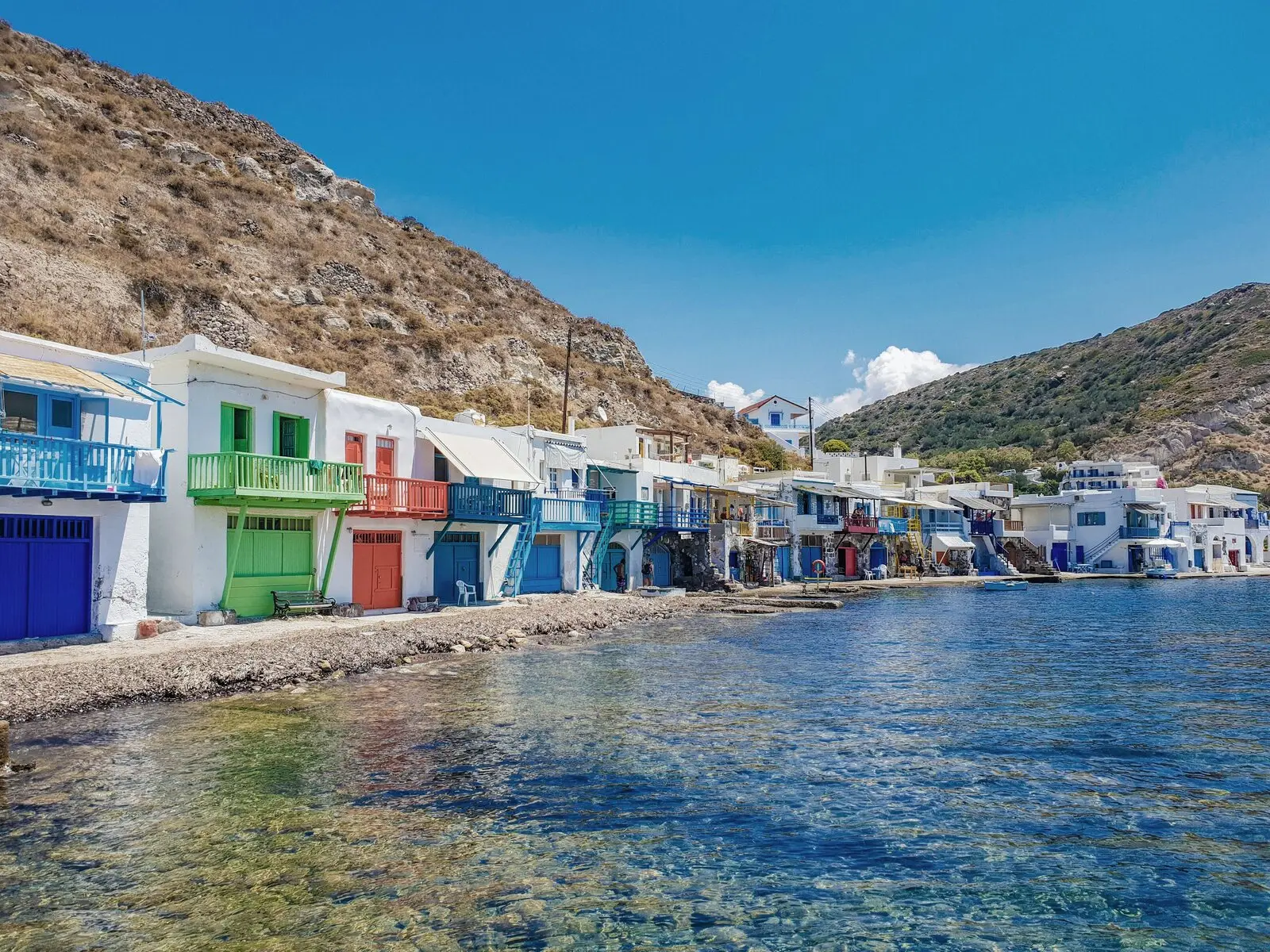
Klima is a row of fishermen's syrmata painted in flat colours along the waterline, best in the hour before sunset when the light comes off the sea onto the doors. Plaka, above it, is where everybody goes for the sunset; the castle is a ten-minute climb and worth it.
The questions we answer twice a day
Do we need a car?
For three days or more, yes. Four of the best beaches are down unsurfaced tracks that a scooter will not enjoy. We will book one and have it waiting at the airport or the port.
Is the ferry or the plane better?
The plane is thirty-five minutes from Athens and small; the ferry is three to seven hours depending on which one. The fast ferry in August books out three weeks ahead.
When is the meltemi?
Mid-July to the end of August, mostly. It blows from the north, which is the side we are on, so on those days we send people to the south coast.
Is there anything to do when it rains?
The mining museum at Adamas is better than it sounds, the catacombs do not care about the weather, and there is a distillery at Zefyria. It rains about twice between May and September.